The Six Types of Chinese Tea, Explained
All “true” tea comes from one plant, Camellia sinensis. Chinese tea is traditionally grouped into six families according to how the leaves are processed – especially how much they are oxidised.
- Green tea: heated soon after picking to stop oxidation. Fresh and vegetal – e.g. Longjing, Biluochun.
- White tea: simply withered and dried. Delicate and sweet – e.g. Silver Needle, White Peony.
- Yellow tea: similar to green tea with an extra gentle “yellowing” step; rare and mellow.
- Oolong: partially oxidised, from light and floral to dark and roasted – e.g. Tieguanyin, Da Hong Pao, Dancong.
- Black tea (called “red tea” in Chinese): fully oxidised, sweet and malty – e.g. Keemun, Dianhong, Lapsang Souchong.
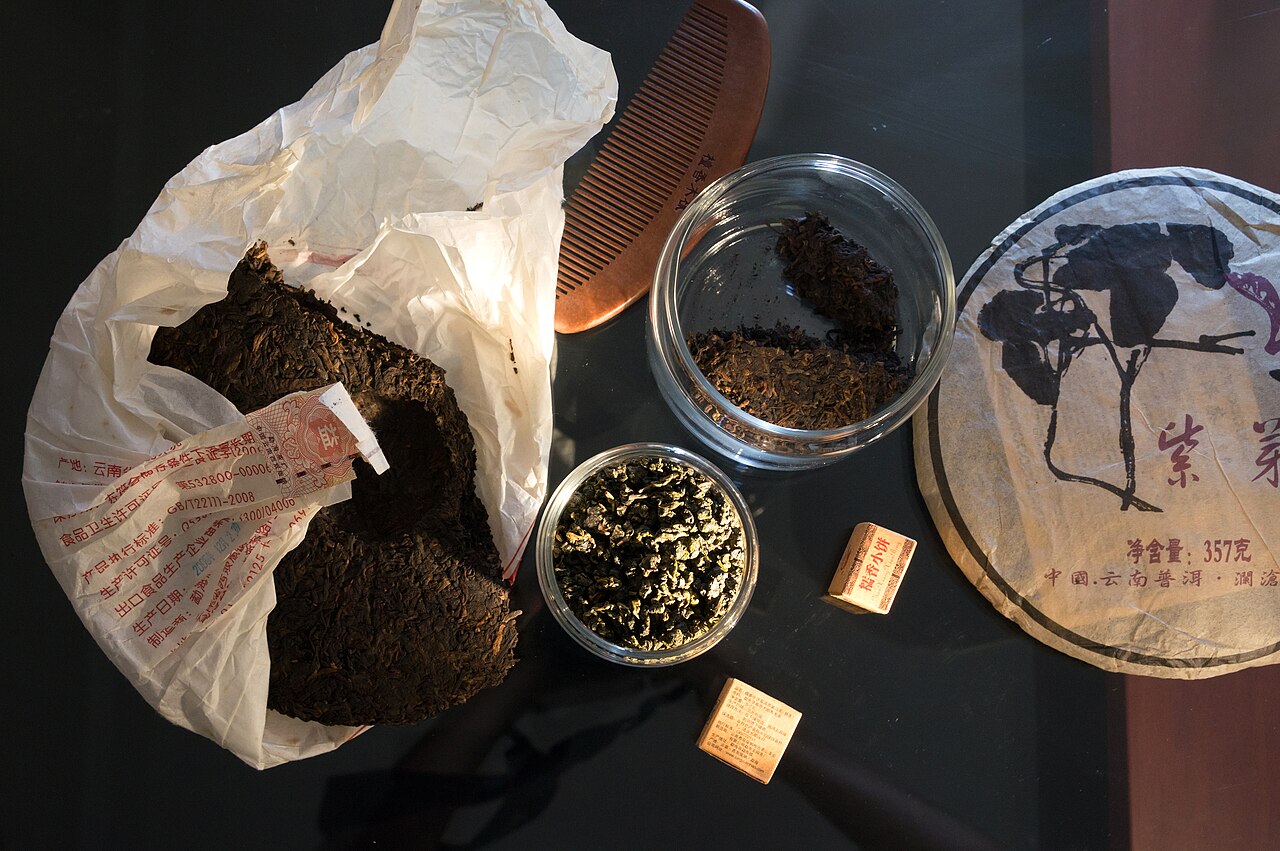
- Dark tea: post-fermented teas that change with age – pu-erh is the best known.
Where to start?
If you like light, fresh flavours, try a green or white tea. If you enjoy fragrance, explore oolongs. For something rich and comforting, go for black tea or ripe pu-erh.

