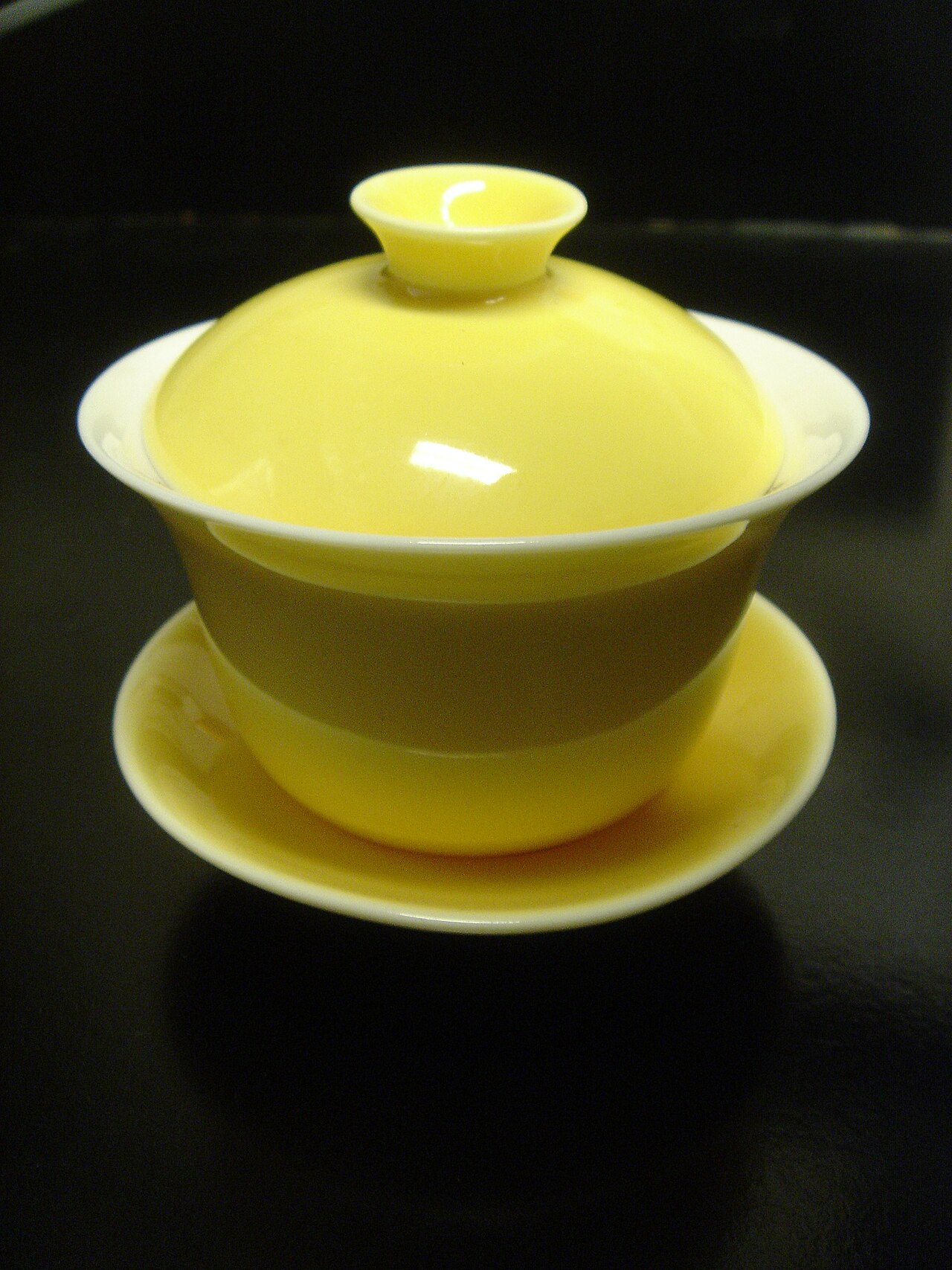
Gaiwan or Teapot? Choosing the Right Brewing Vessel
Both the gaiwan (a lidded bowl on a saucer) and the small clay teapot are classic tools for gongfu brewing. Neither is “better” – they simply do different jobs.
The gaiwan: honest and versatile
Glazed porcelain or glass does not absorb aroma, so a gaiwan shows you the tea exactly as it is. It is easy to clean, you can see and smell the leaves between infusions, and you can use it for any type of tea. That makes it the best choice for tasting new teas and comparing samples.
- Best for: green, white, yellow and flower teas; tasting and comparing.
- Watch out: the rim gets hot – fill to just below the rim and hold the edge of the saucer and the lid knob.
The clay teapot: rounder and warmer
An unglazed zisha pot keeps heat well and many drinkers find it rounds off sharp edges in the cup. Because the clay slowly takes on the character of the tea, it is best kept for one family of teas.
- Best for: roasted oolongs, rock teas, black tea and pu-erh.
- Watch out: dedicate it to one tea type and never use detergent.
Quick comparison
- Cleaning: gaiwan – very easy; teapot – rinse with water only.
- Aroma: gaiwan – neutral; teapot – softer, rounder.
- Learning curve: gaiwan – takes practice to pour; teapot – easier to pour.
- Flexibility: gaiwan – any tea; teapot – one tea family.
Our suggestion
Start with a 120–150 ml gaiwan to learn your teas. When you find a style you drink every day, add a zisha pot dedicated to it.

